Supply Chain

GREATER TRANSPARENCY &
BETTER CONTROL

We manufacture 98% of our workwear and 100% of our footwear in our own factories, while 10 suppliers provide 90% of our textile materials.

That gives us a clearer view of where materials come from, how products are made and how working conditions are managed. For procurement and sustainability teams, it means stronger documentation, easier verification and less time spent chasing answers.

A supply chain you can actually follow

Textile supply chains can become complex quickly, with materials and products moving through multiple factories, producers and subcontractors before they are finished. Every additional handover makes working conditions, chemical management, materials and origin harder to trace.

We therefore keep our supplier base deliberately focused. Fewer, closer relationships make it easier to build for the long term, respond quickly when something changes, and improve standards with the right partners.

A tighter supplier base makes it easier to:

  • Follow up on working conditions and supplier requirements
  • Address issues faster
  • Develop supplier relationships over time
  • Create greater transparency throughout the supply chain

Long-term supplier partnerships and responsible sourcing

Ten textile producers account for 90 per cent of all the textile material we buy, an unusually concentrated supplier base in an industry known for long and complex supply chains.

We purchase textile materials ourselves, helping us keep the chain focused and easier to oversee. Across textiles and components, we work with fewer than one hundred suppliers in total.

Some of those relationships go back 15–30 years, giving both sides the knowledge, stability and time needed to improve quality and sustainability together.

INVESTING IN BETTER WAYS TO DYE TEXTILES

Reducing the impact of the supply chain also means investing in better ways of doing things. Blåkläder has therefore invested in Swedish company Imogo and its resource-efficient spray-dyeing technology for cotton and linen.

The technology can reduce water, energy and chemical use by more than 90%. Our aim is not to keep that progress to ourselves, but to help make the technology available to more of the textile industry and support more resource-efficient dyeing at scale.

Looking beyond our factories

Because manufacturing takes place in our own factories, we can focus more closely on what happens further upstream, including fabric, yarn and fibres. This is where much of the environmental impact occurs and where visibility into working conditions can be hardest to achieve.

A more focused supply chain gives us a clearer view of:

  • Materials and origin
  • Chemical management
  • Production facilities
  • Documentation and verification
  • Supplier stages beyond the factory

Product traceability you can verify

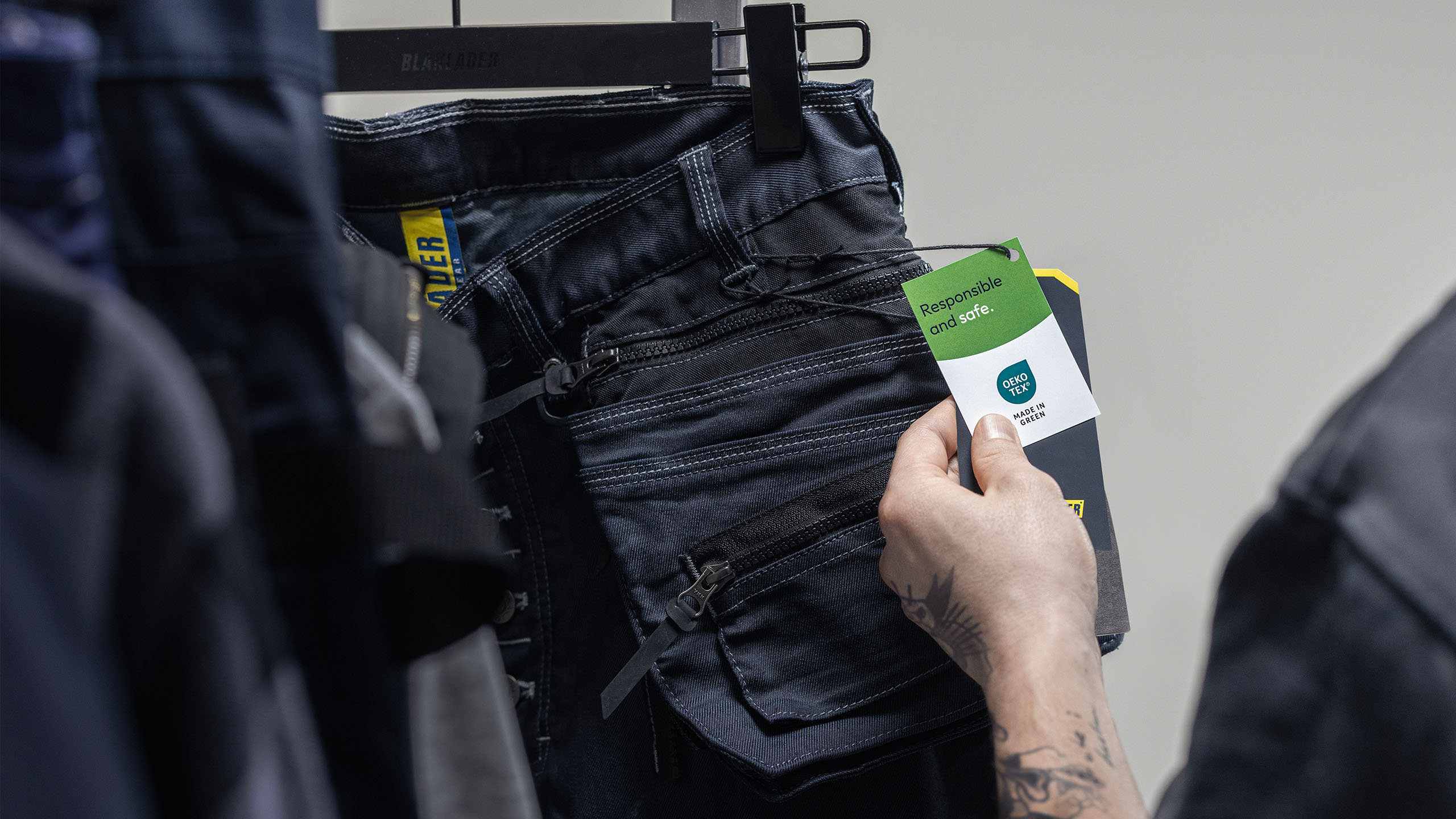
More than 300 Blåkläder products carry the OEKO-TEX® Made in Green label. Each has a unique product ID you can use to trace the production chain from material to finished product.

The information is independently verified, documented at the product level, and accessible through the product’s QR code, making traceability data easier to use in tenders, audits, and supplier assessments.

What the QR code shows

Every Made in Green-labelled product has a QR code linked to its unique ID, giving you access to information verified by an independent third party.

Scan the code to see:

  • Which production facilities were involved
  • The product’s journey from raw material to finished product
  • Verified information from OEKO-TEX®

For large organisations, that means less time searching for evidence and stronger documentation when you need to verify sustainability requirements.

INDEPENDENTLY VERIFIED
SUPPLY CHAIN TRANSPARENCY

Several independent systems cover our production and products:

STeP by OEKO-TEX®

Covers chemical management, working environment, quality, health and safety and social responsibility in production.

OEKO-TEX® Made in Green

Provides product-level traceability and shows where and how products have been manufactured in certified facilities.

OEKO-TEX® STANDARD 100

Confirms that products and components have been tested for harmful substances.

Together, these systems make it easier to verify claims, document compliance, and make purchasing decisions with greater confidence.

NEED SUPPLY CHAIN
DOCUMENTATION?

We can provide documentation, certificates and answers ahead of tenders, audits or internal supplier reviews.

See our production for yourself

Book a visit to our factories or request documentation for your supplier review.

Book a visit