HOW TO DRESS FOR COLD WEATHER?
HOW SHOULD I DRESS FOR COLD WEATHER?
When the temperature drops, staying warm and dry at work is essential. Dressing correctly in winter conditions can make the difference between a productive day and a risky day in the cold. In this guide, we explain how to dress for cold working environments using the layering principle.
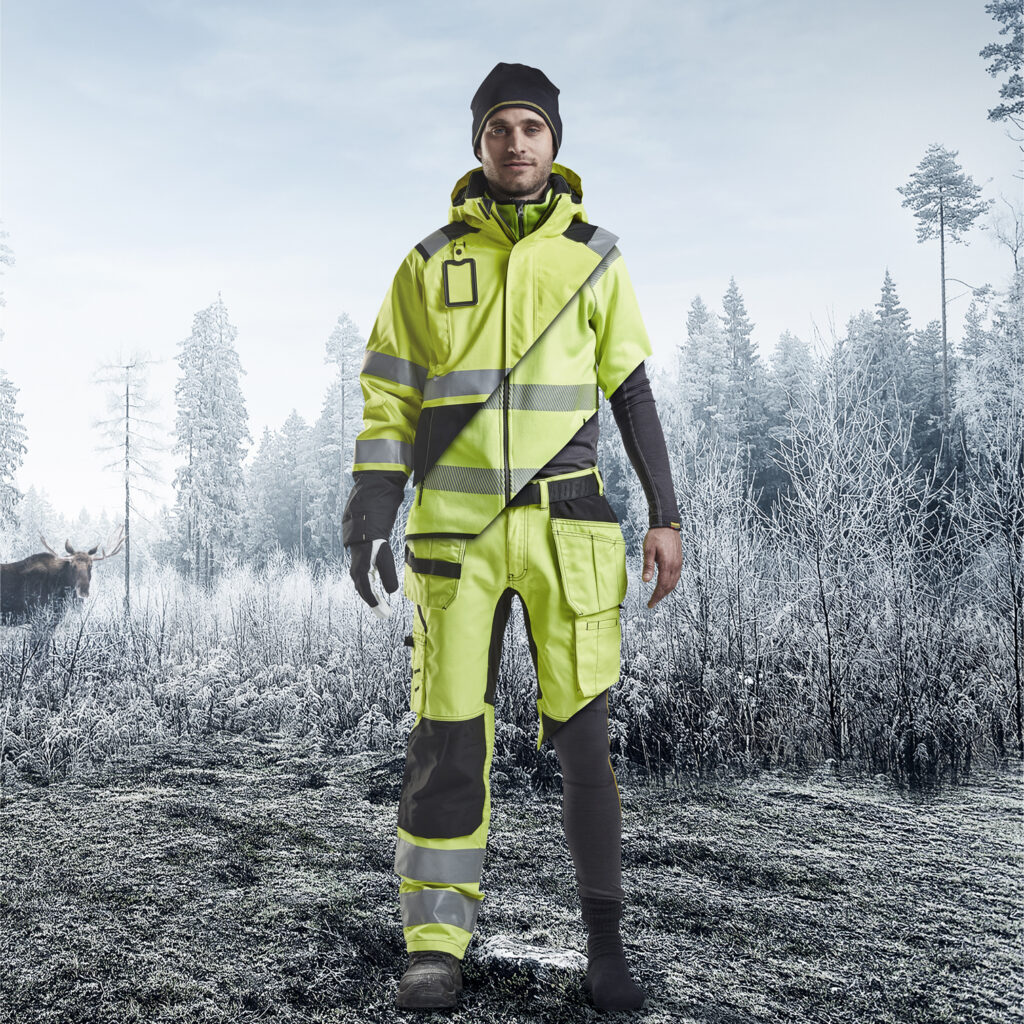
TIPS FOR CHOOSING WORKWEAR FOR WINTER
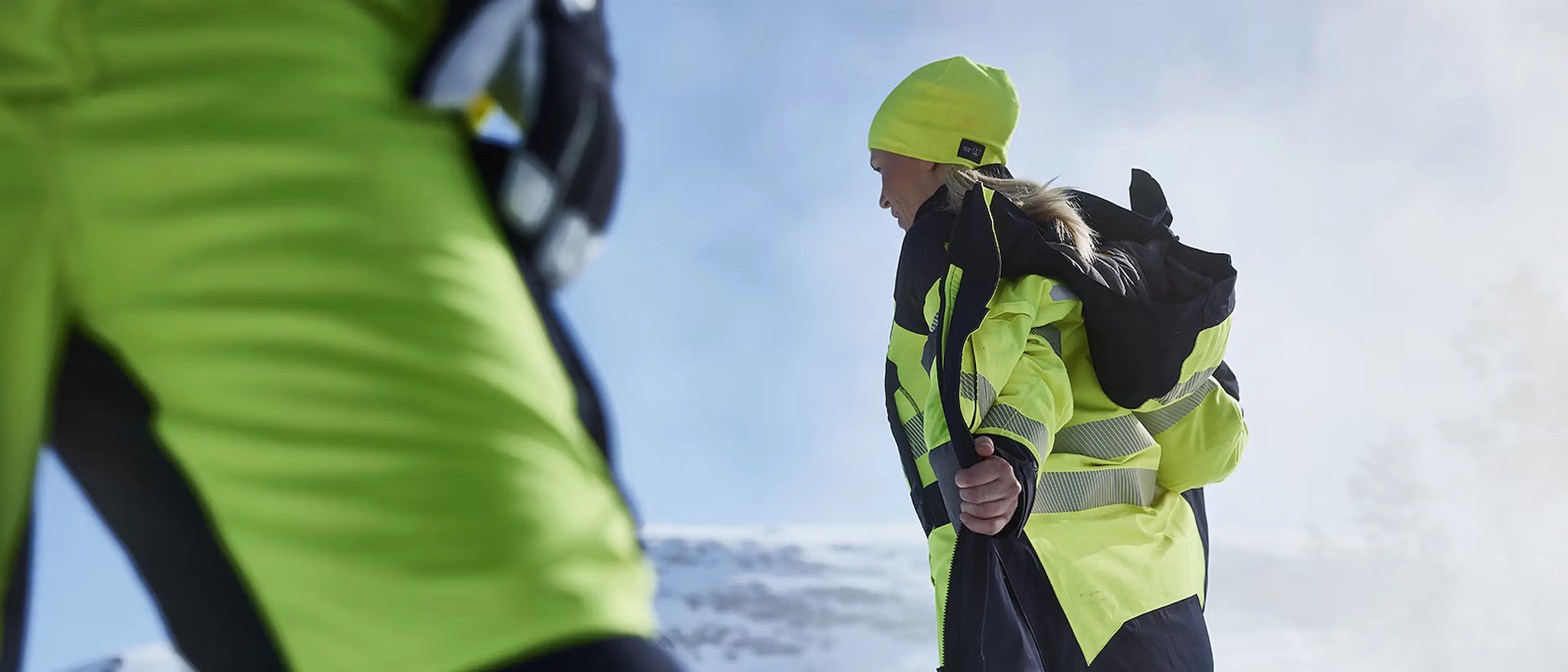
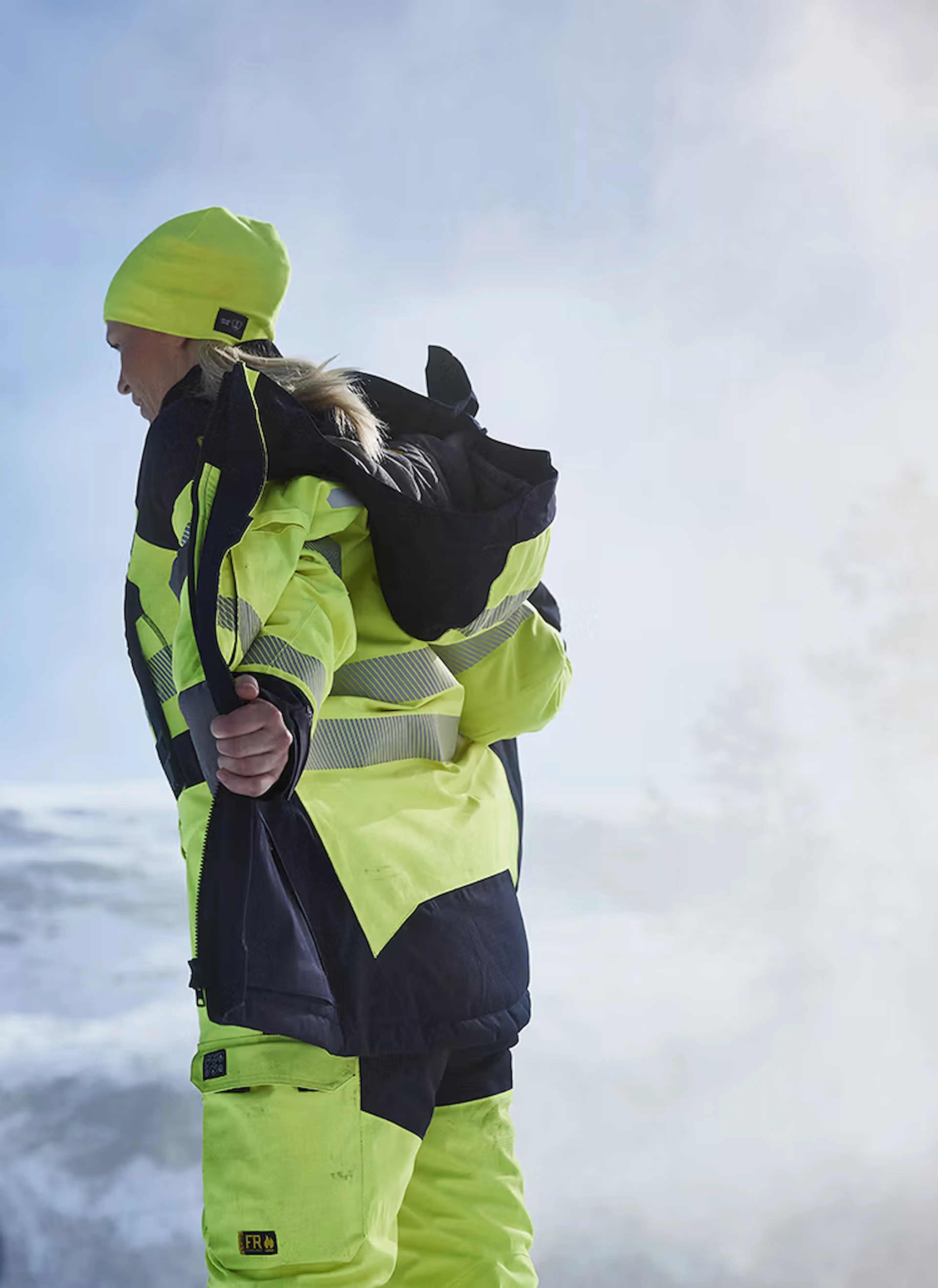
- Invest in high-quality hi-vis garments for visibility in dark and cold environments.
- Do not forget the accessories. Hats, gloves, winter boots and knee pads are essential for keeping the whole body warm and protected.
- Choose workwear certified for cold and rain, such as garments certified according to EN 342 and EN 343.
WHY IS LAYERING IMPORTANT?
The layering principle is the key to staying warm, flexible and protected in cold weather. Each layer has a specific job:
- Base layer – keeps the skin dry by transporting moisture away from the body.
- Mid layer – traps body heat and provides insulation.
- Outer layer – protects against wind, snow and rain.
BASE LAYER – WHAT SHOULD I CONSIDER?
A good base layer is where everything starts. These garments are made from materials such as merino wool or synthetic fibres that efficiently move moisture away from the skin. Avoid cotton, as it holds moisture and can cause the body to cool down.
Tips
- Choose a close-fitting base layer to maximise moisture transport.
- For extreme cold, choose a warm base layer in merino wool.
MID LAYER – INSULATION FOR WARMTH
The mid-layer should provide insulation without restricting your freedom of movement. Popular materials include fleece, down and synthetic insulation.
Tips
- Consider the thickness. A thicker mid-layer gives more warmth but may affect mobility.
- Combine several thin mid layers for greater flexibility, so you can easily add or remove garments depending on activity level and temperature.
OUTER LAYER – PROTECTION AGAINST WIND AND MOISTURE
A good outer layer should be waterproof and windproof to protect you from harsh weather. Look for Blåkläder garments with breathability to help prevent moisture build-up from the inside.
Tips
- Make sure the outer layer has adjustable features, such as a hood and cuffs, so you can adapt the protection to the conditions.

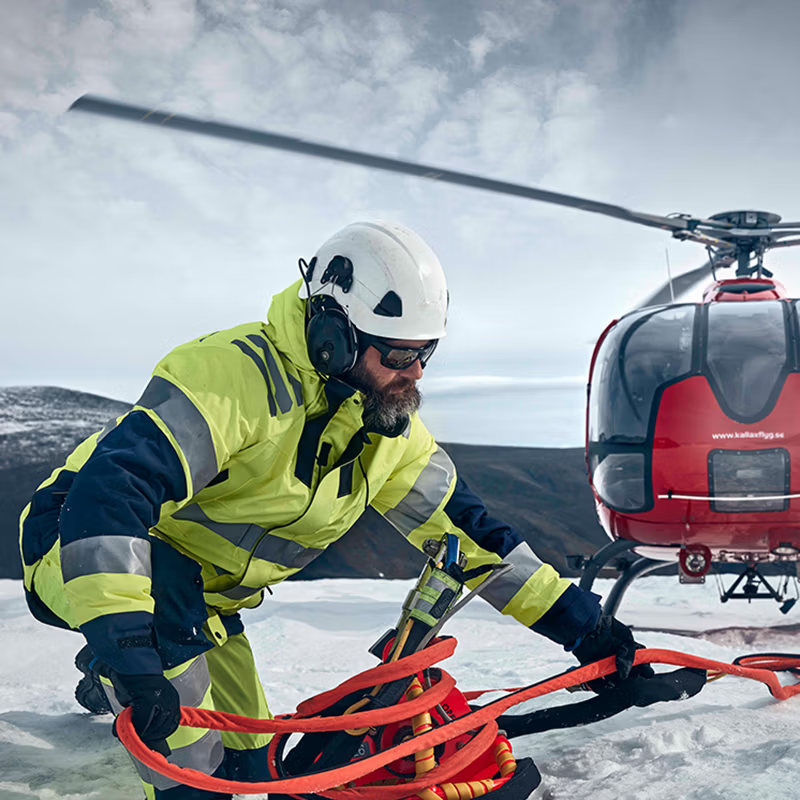
COMMON QUESTIONS ABOUT WORKWEAR FOR WINTER AND COLD WEATHER
How can I keep my feet warm?
Use the layering principle here, too. Combine thin moisture-wicking socks with thicker wool socks and lined, waterproof winter safety boots.
Which materials are best suited for cold-working environments?
Merino wool is an excellent choice for base layers, while fleece is a warm and flexible mid-layer.